
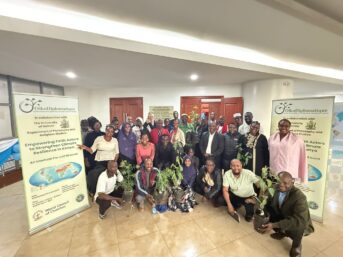
As the world prepares for COP30, faith and philosophy, science and activism converged in Nairobi to forge collaboration and to ask what moral courage looks like in the face of climate change.
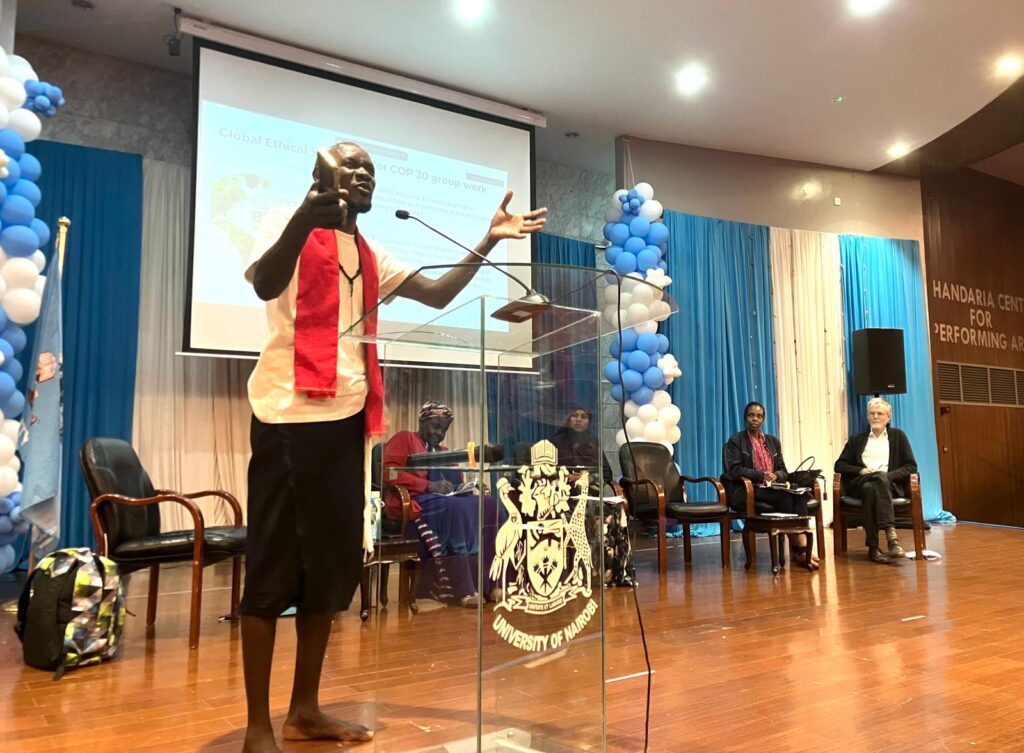
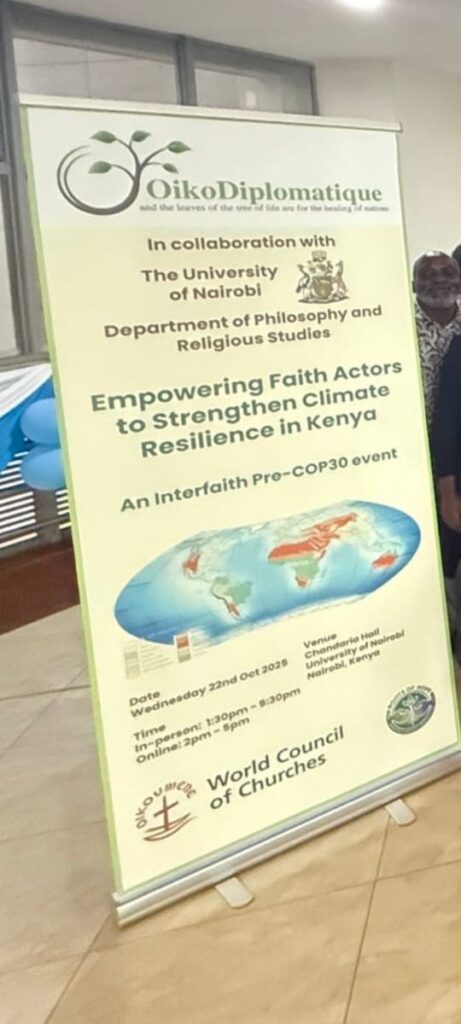
Held at the University of Nairobi and convened by OikoDiplomatique in collaboration with the Department of Philosophy and Religious Studies, the hybrid dialogue drew over 80 participants from all continents; from faith leaders and academics to negotiators, scientists and youth, united by a shared conviction that ethics, equity and justice must guide climate action.
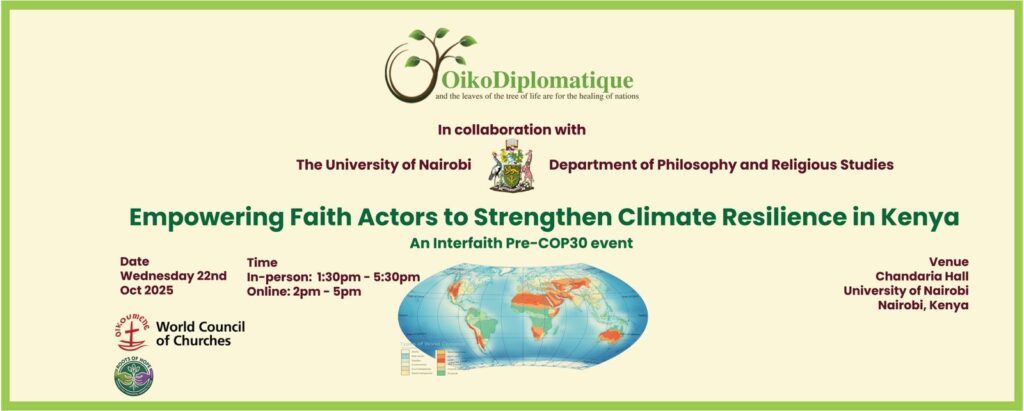
Bridging Faith and Science
Opening prayers from Christian, Muslim, and African Traditional faiths set a tone of unity, reminding participants that care of our common home is a sacred duty shared across traditions.
OikoDiplomatique Co-Director Nkatha Kobia stressed that faith-inspired climate action must be grounded in science and ethics, and must work with national leadership in sharing responsibility for the care of Creation. She noted that the dialogue’s outcomes would inform the Global Ethical Stocktake of the COP30 Presidency, bringing faith voices into multilateral climate deliberations.

Her Co-Director, Dr. Alan Channer, celebrated Kenya’s leadership in renewable energy, with over 80% of electricity drawn from renewable sources, and reflected on how the nation’s anthem itself “O God of all creation, bless this our land and nation” reveals a deeply rooted moral and spiritual framework for environmental stewardship.
Dr. Patrick Nyabul, Chair of the host department, emphasized the value of blending faith and reason: “A faith-based approach must involve solid, science-based methods,” he said, urging collaboration between faith communities and academia as a bridge between ethics and evidence.
A Call to Moral Action
In his keynote address, Rev. Dr. Samuel Kobia, founder of OikoDiplomatique and former General Secretary of the World Council of Churches, traced a half-century of faith–science collaboration in confronting environmental degradation. He affirmed that caring for creation is a divine imperative, a moral call to right the wrongs of humanity’s assault on the Earth, and reminded participants that Kenya’s witness of faith-inspired action can help renew global ethics for climate justice.
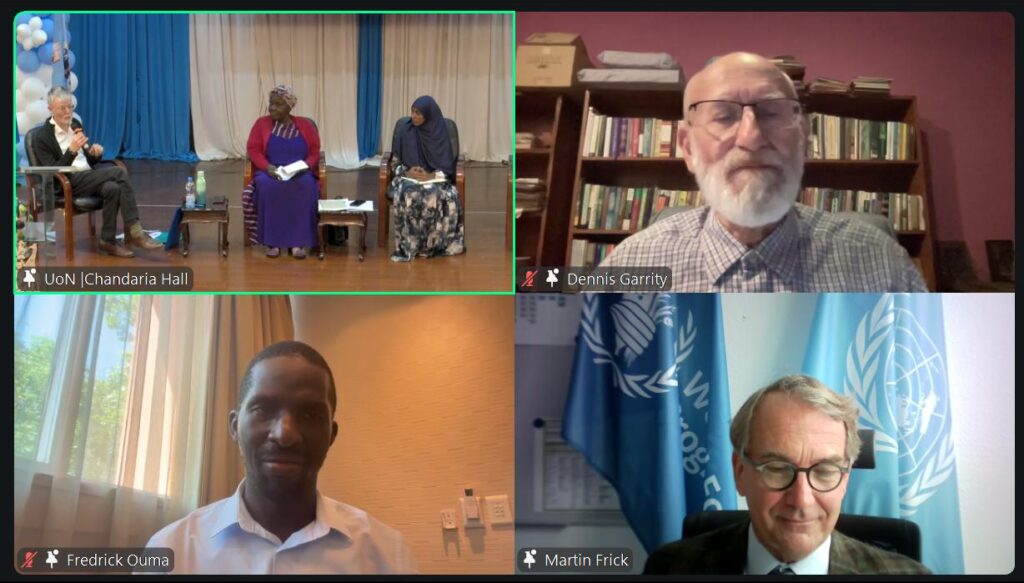
From the global stage, Dr. Dennis Garrity, Chair of the Healthy Planet Action Coalition, sounded an urgent warning that the 1.5°C goal of the Paris Agreement is already out of reach. He called for a bold, science-driven restoration agenda, pulling carbon back into the soil and forests while also increasing the albedo of the planet.
Dr. Martin Frick of the World Food Programme made a livelihood-centred case for restoration. ‘Restoring degraded land puts people to work, creates agricultural production and sinks carbon,’ he maintained. He added that “the poorest people on this planet are our greatest hope” – those whose daily survival depends on nature’s balance can sink carbon and deliver food-secure futures if empowered with finance and technical help.
Frederick Ouma, from Kenya’s Ministry of Environment, Climate Change and Forestry, and a COP negotiator, reminded participants that global climate talks are shaped by power and interest. He said faith observers are essential to keep negotiations anchored in ethics and the public good.

Brazilian Franciscan Brother Rodrigo Peret offered a prophetic critique of market-driven “green transitions,” warning that commodifying forests risks replacing spiritual value with financial metrics. He urged faith actors to “expose false solutions” that dispossess indigenous custodians.
Grace Ojiayo from Nairobi City County noted that faith institutions are often first responders in climate crises and urged counties to formally link with them for quicker, community-trusted action. She highlighted the fact that “Faith actors are the first to open their doors, turning sanctuaries into shelters and kitchens into food banks,” and called for stronger links between churches and disaster-response systems.
Grounded in Local Realities
From Kenya’s coast, Rev. Jane Jilani shared stories of women restoring mangroves amid land insecurity and health risks.
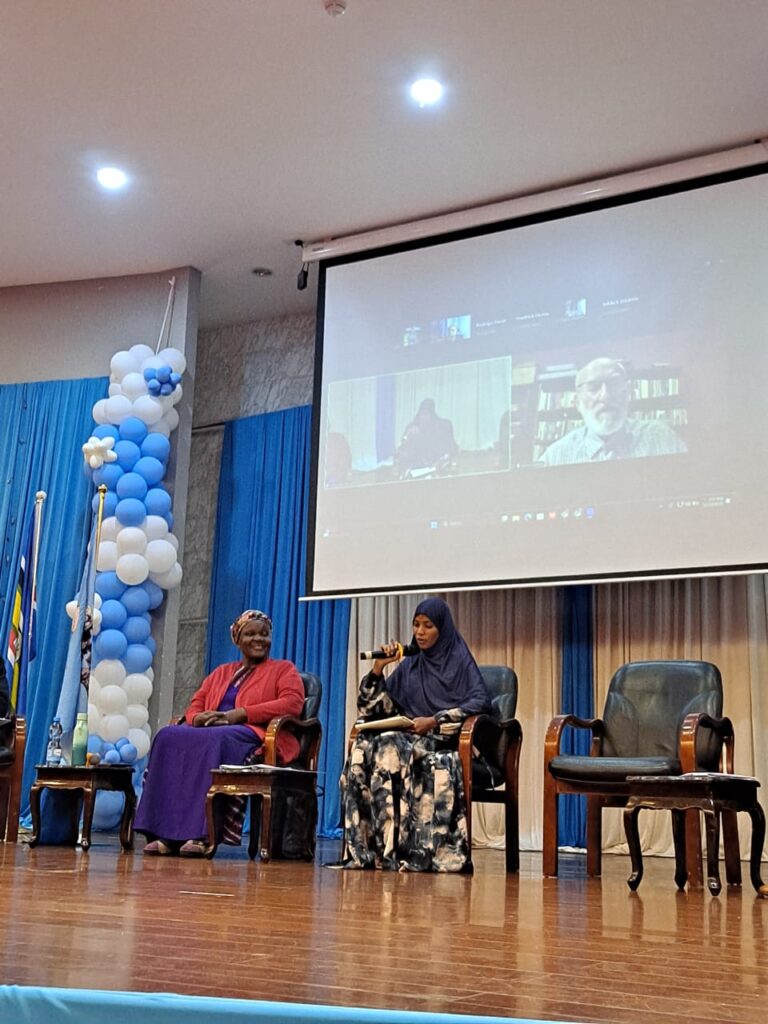
In Isiolo County, youth leader Mariam Abdirashid told how the CBO, Roots of Hope, which she founded, inspired a local imam and students to plant 400 trees, with seedlings provided by the Kenya Forest Service, “because one tree is not enough for the hope we need.” Their action demonstrated how youth initiative, in combination with faith leadership, can yield quick, visible restoration.
Faith Networks as Moral Catalysts
Athena Peralta, Director of Climate Justice and Sustainable Development at the World Council of Churches, underscored that global advocacy must be rooted in local moral power. She invited participants to join the Ecumenical Decade of Climate Justice Action and the “Turn Debt into Hope” campaign, urging faith communities to push for debt relief so that vulnerable nations can invest in resilience rather than repayment. Peralta affirmed the readiness of the World Council of Churches to amplify the priorities identified during the Dialogue, emphasising that faith communities hold the moral authority, deep networks, and local trust that make them go-to actors in building climate resilience”.

From Dialogue to Global Ethical Stocktake
A real-time poll during the dialogue revealed a shared message: change in systems, in attitudes, and in shared responsibility for creation is needed. Participants committed to turning ethical reflection into tangible contributions to the Global Ethical Stocktake (GES), linking moral courage with practical action in climate justice, land restoration, debt reform, and youth-faith collaboration.

As the dialogue closed, Nkatha Kobia reflected on the spirit of collaboration that had defined the day. She thanked the University of Nairobi and global partners for co-creating a platform where “faith, ethics, and action meet.” “Our task,” she concluded, “is to keep building bridges, between belief and policy, between community and science, between local stories and global commitments. The moral courage we have spoken of today must become a living action.”
The event ended as it had begun, with interfaith prayers and the Kenyan national anthem, affirming that care for creation is both a sacred trust and a national calling.
Download event report >> Kenyan Pre‑COP30 Dialogue Highlights the Role of Faith Actors in Tackling Climate Change: Adding Ethical Value to Climate Discussions (PDF)